
Sambuca Ring Route - Visit Pistoia
Photo credit: Archivio DISCOVER PISTOIA – Foto Lorenzo Marianeschi
routes / In the mountains

Sambuca Ring Route

Apennine grand tour

Sambuca Pistoiese


Home / itinerari / Sambuca Ring Route

routes
In the mountains
Stages
2
length
52 km
Means of transport
Trekking, mountain bike, cavallo

An itinerary that combines sport, landscape, and historical heritage into a single authentic and immersive experience, among the villages and scenery of Sambuca Pistoiese.

The route crosses the territory of Sambuca Pistoiese and is configured as a true Apennine grand tour, designed for those who wish to traverse its ridgelines, discover ancient stone villages, and immerse themselves in highly evocative forest environments.

The route alternates high-altitude panoramas, technical descents, and links with the national cycling network, offering a complete experience of nature, history, and adventure.

The loop starts from Posola and climbs toward Monte Pidocchina, reaching an elevation of 1,300 meters. From here, the trail follows the ridge with wide views over the surrounding valleys, then descends toward Passo della Collina along a mixed surface of packed earth and solid stone, immersed in a highly scenic natural setting.

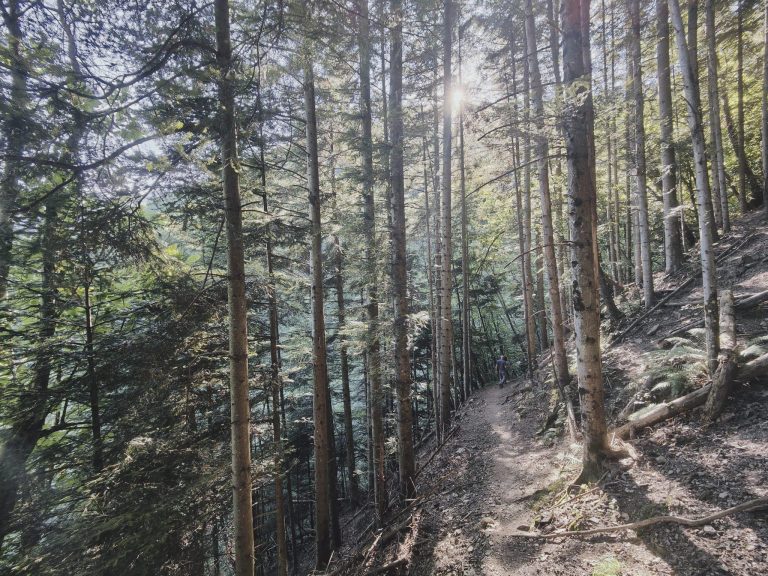
From the pass, the route climbs again toward Badia a Taona, crossing a vast forested area shaded by centuries-old beech trees. The Abbey represents a key junction of the itinerary: here the main ridge is left behind to head east, entering the heart of the variant.

The detour leads toward Torri di Sambuca along trails and white forest roads that gradually lose elevation. The village, one of the most significant examples of medieval stone architecture in the Apennines, appears perfectly integrated into the mountain landscape. The descent crosses high-altitude pastures and wooded slopes, gradually accompanying the transition from the open spaces of the Abbey to the more intimate atmosphere of the historic settlement.

Continuing toward the valley floor, in the direction of Lentula and Limentra, the route connects with the Ciclovia del Sole, part of the European EuroVelo 7 route. In this Apennine section, the cycle path follows low-traffic secondary roads and scenic routes that ensure continuity and safety along an internationally significant itinerary.

Following the signs toward the northwest, it is possible to complete the loop by climbing back toward Sambuca Castello or return to Posola via ancient mule tracks and rural roads connecting the various settlements.
Click here to download the route track

Stages Itinerary


Posola

Sambuca Pistoiese
stage 1

Posola

Situated at an elevation of 942 m, Posola lies on a plateau near the ridge between the Reno Valley and the Western Limentra Valley. The surroundings of the village are characterized by extensive forests of chestnut, beech, oak, and conifer trees. According to tradition, the name derives from a post station for travelers and merchants, where a stone was ‘laid down’ (posata) to mark a place of rest and refreshment. Highlighting the village’s role as a border point, a distinctive dialect was once spoken here—somewhere between the mountain dialect of Bologna and that of Pistoia.
 

Badia a Taona

Sambuca Pistoiese
stage 2

Badia a Taona

Badia a Taona, or the Abbey of San Salvatore at Fontana Taona, is an ancient Benedictine abbey located in the Pistoia Apennines of Tuscany. First documented in 1004, it served as an important religious center and a hospice for pilgrims traveling along the mountain routes connecting the region to the plains. During the Middle Ages, the abbey owned extensive lands thanks to donations from local nobles, but it began to decline from the 13th century onward. Today, only its ruins remain, preserving the memory of its historical and religious significance.
 

Torri

Sambuca Pistoiese
stage 3

Torri

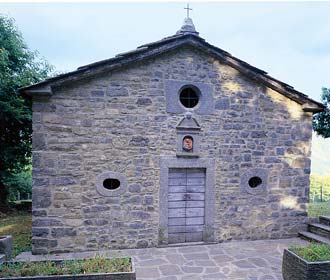
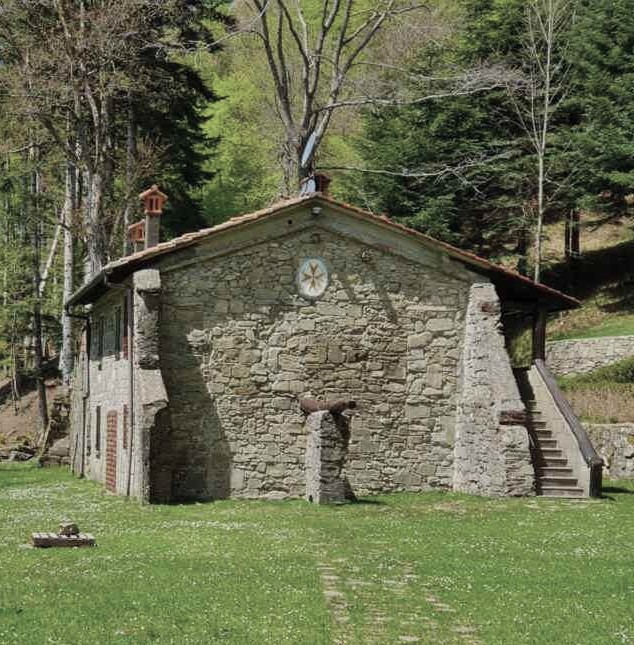
Torri is a small village in the Pistoia Apennines, in the municipality of Sambuca Pistoiese, located at an altitude of 912 meters. First documented in 982, it was an important fortified medieval settlement and came under the control of the Municipality of Pistoia in 1319. Today, it retains its historic character, with stone houses, paved streets, and the Church of Santa Maria Assunta.

Eventi